Most pipelines have six real stages, and teams lose visibility not at the end but in the gap between Contacted and Qualified, and between Site Visit and Negotiation.
Ask five real estate sales heads to draw their pipeline and you'll get five different diagrams — but underneath the different labels, the same six stages show up almost every time. Understanding them clearly is the difference between a pipeline that tells you something and a list of leads that doesn't.
The Six Stages That Actually Matter
1. New / Inquiry
A lead exists — a form fill, a call, a walk-in, a portal referral. At this point you know almost nothing except that someone showed interest. The only job here is to log it immediately, from whatever channel it arrived on, before it can be lost.
2. Contacted
First outreach has happened. This stage is where Time to First Contact gets measured, and where a lead either confirms real interest or reveals itself as a dead end.
3. Qualified
Budget, timeline and requirement are roughly understood. This is usually where lead scoring becomes useful — separating a Hot, ready-now buyer from a Cold, six-months-out browser who happens to share the same "interested" status.
4. Site Visit
The buyer has seen the property, physically or virtually. Outcomes here — interested, needs more time, not a fit — need to be logged permanently, because this is usually the single highest-signal moment in the entire pipeline.
5. Negotiation / Booking
Price, unit and terms are being finalized. This is where approval workflows matter most: any discount above a threshold should route to the right approver before anything is confirmed.
6. Booked / Closed
The unit is locked, the booking is confirmed, and — if a channel partner was involved — a commission entry should be created automatically, not manually, the moment this stage is reached.
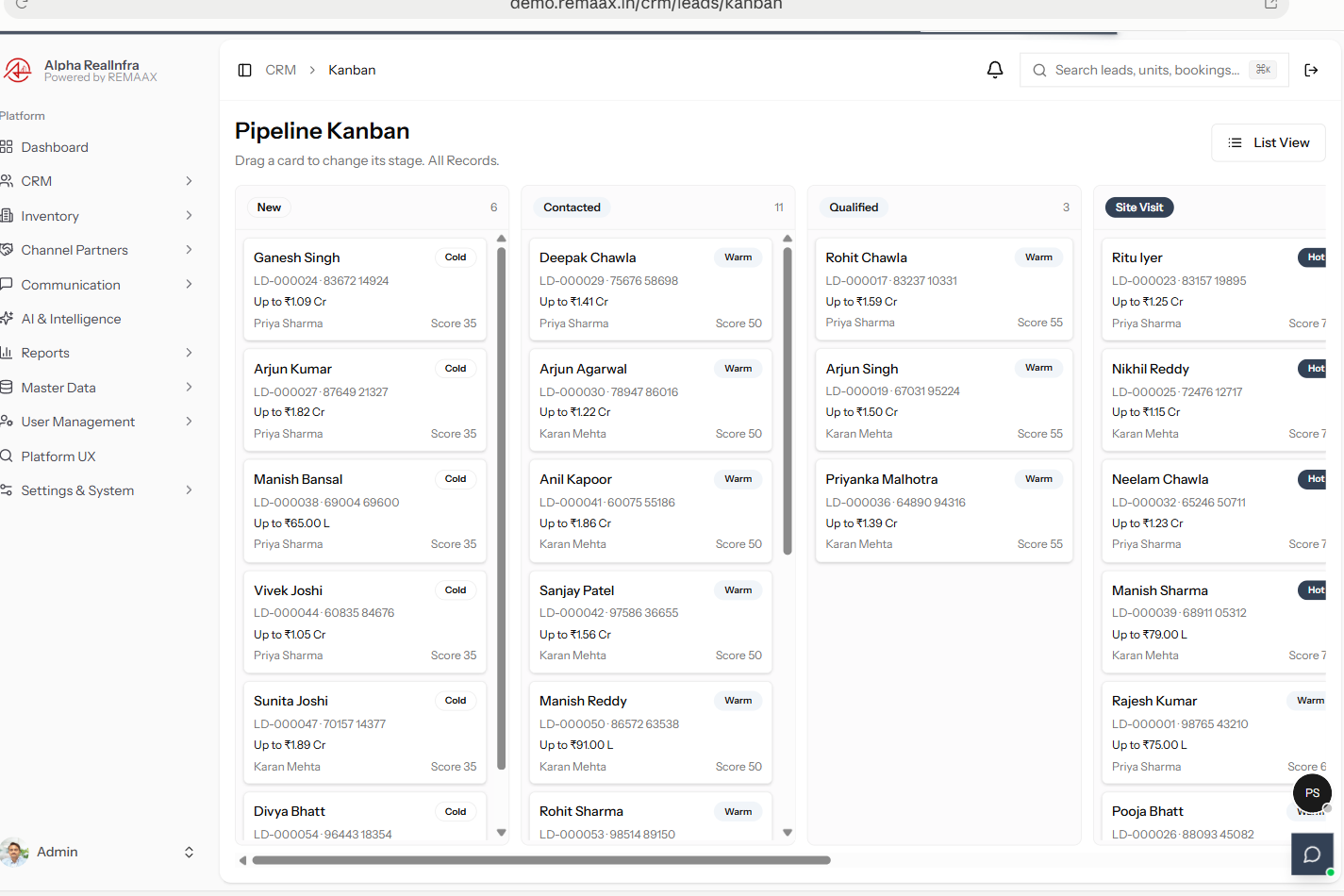
Where Teams Actually Lose Visibility
Almost never at "Booked." Almost always in the gap between Contacted and Qualified, where leads sit half-followed-up in someone's head rather than a system, and between Site Visit and Negotiation, where an outcome gets discussed on a phone call and never makes it back into the record.
A pipeline you can drag a card across — with score, priority and outcome visible on every card — closes both gaps at once: it forces the outcome to be logged to move the card, and it makes the current state of every deal visible to a manager without a status meeting.