A verbal discount approval isn't an approval. If a booking can still finalize without sign-off, the workflow is decorative, not structural.
Every sales manager has a discount policy. Almost none of them are enforced by anything except an agent's memory and good faith — which means the policy is really more of a suggestion, and margin leaks out one verbally-approved exception at a time.
Why Verbal Approval Doesn't Work
A discount request over the phone takes ten seconds: an agent asks, a manager says yes, the deal moves forward. Nothing about that exchange gets recorded anywhere except two people's memory. Multiply that by a sales floor of fifteen agents making a handful of pricing calls each per week, and a business is running a meaningful chunk of its margin decisions with zero audit trail.
What a Real Approval Workflow Needs
- A configurable threshold. Discounts under a set percentage or amount can be agent-level; anything above needs to route upward — and that threshold should be adjustable per project or role, not hardcoded.
- Routing by role, not by person. The approval chain should follow a role — Branch Manager, Director, whoever the org chart says — so the workflow keeps working when a specific person is unavailable or the org restructures.
- The booking can't finalize without it. This is the part that actually matters. If a discount above threshold can still be booked without sign-off, the "approval" is decorative. The system should structurally block finalization until approval is recorded.
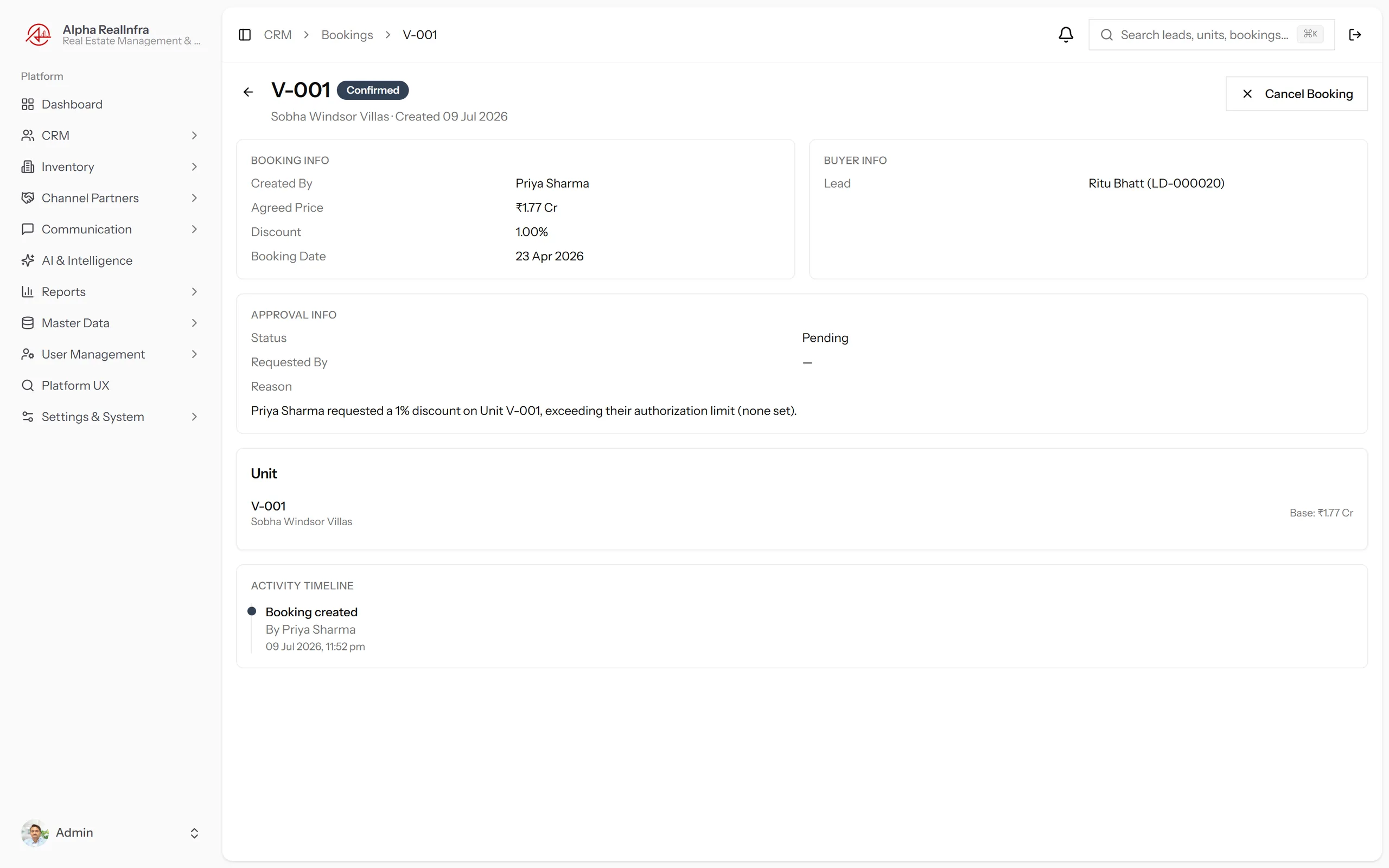
- A visible trail on the booking record. Agreed price, discount amount, and who approved it should be part of the permanent booking record — not a side conversation that's unrecoverable later.
What This Looks Like Day to Day
An agent enters a discount above the configured threshold. Instead of finalizing, the booking routes to the appropriate approver — automatically, based on role, not on who happens to be free. The approver sees the full booking context, approves or declines, and only then can the booking be confirmed. Every step — the request, the approver, the decision — is part of the booking's permanent record.
This isn't about slowing sales down. A well-configured threshold means the vast majority of bookings never touch an approval step at all — it's only the exceptions, the ones that actually affect margin, that get the scrutiny they deserve.