Converting 12,500,000 to "one crore twenty-five lakh" in your head, fifty times a week, is a small tax that native formatting removes entirely.
This is the smallest-sounding item on any real estate CRM checklist, and one of the most consistently underestimated. Every number in a property deal — unit price, booking value, commission amount — is naturally spoken and thought about in Lakh and Crore. Most CRMs built primarily for international markets display 12,500,000 and expect you to do the conversion yourself.
The Cost of Getting This Wrong
₹1,25,00,000 read aloud is "one crore twenty-five lakh." Displayed as 12,500,000 in a system built around the international comma-grouping convention, it takes a genuine, if brief, moment of mental arithmetic to convert. Once. That's not a problem. Fifty times a week, in live client meetings, sales reviews and reports, it's a constant low-grade tax on attention — and an easy place for a costly transcription error to slip in during a fast-moving negotiation.
What "Native" Actually Means Here
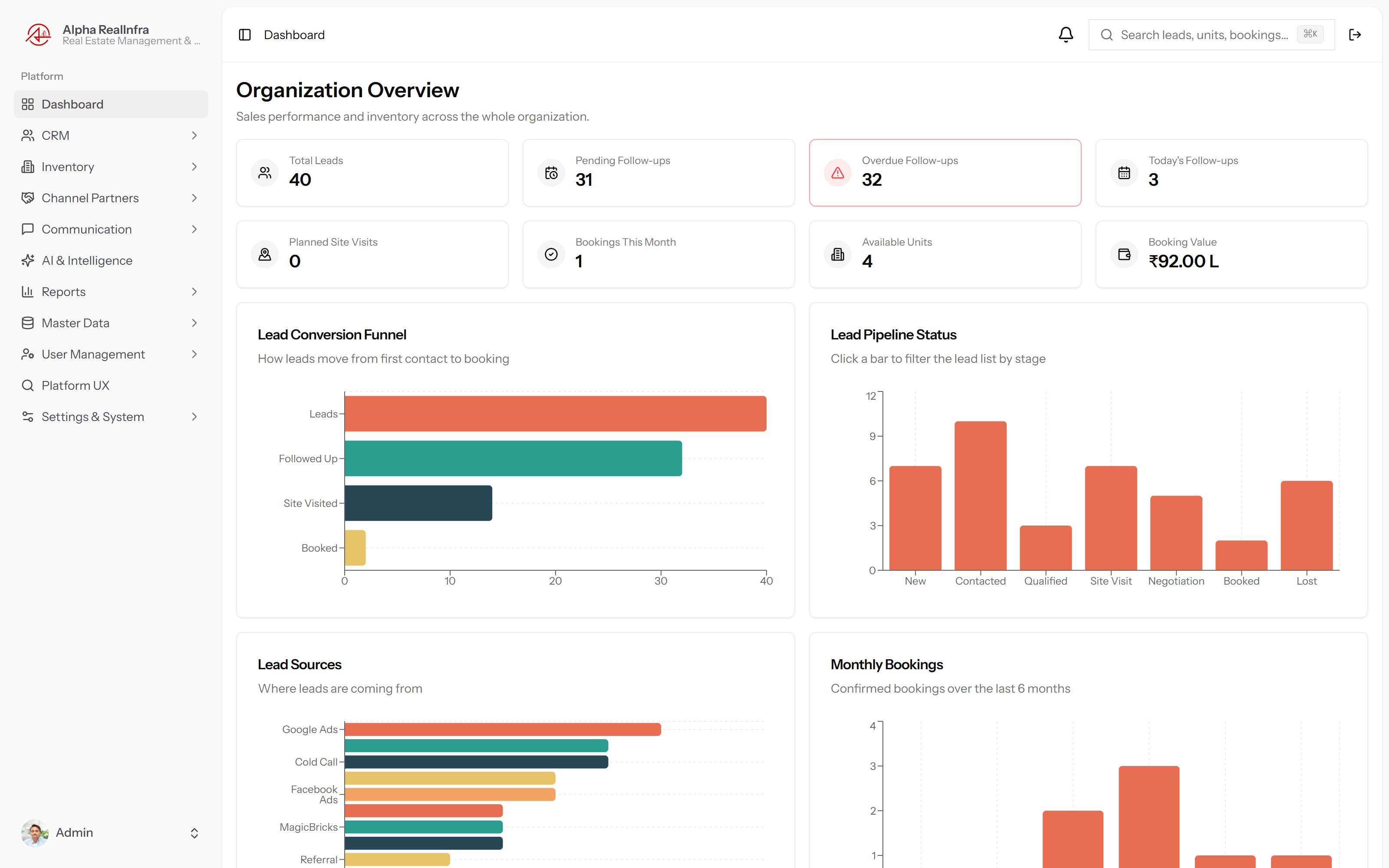
Native Lakh/Crore formatting means every number, in every screen — dashboards, booking records, commission entries, reports, exports — displays in the format your team actually speaks, with no manual conversion, no separate "display setting" that only half the screens respect, and no exported report that reverts back to the international format the moment it leaves the app.
It sounds cosmetic until you've sat in a booking confirmation call doing math in your head while trying to also sound confident about the number.
Why This Is a Reliable Signal About a Platform
Lakh/Crore formatting is a small enough detail that it's genuinely hard to retrofit well across an entire platform — it touches every number-rendering surface, not just one settings page. A CRM that gets this right, consistently, everywhere, is usually a signal that it was actually built with the Indian market as the starting point, not adapted for it after the fact. It's a cheap, fast way to sanity-check a vendor's real design priorities in the first five minutes of a demo.